Subaru Legacy 2.0D Euro Wagon: Bigger is better in the new Legacy wagon

| Image 1 of 4 |
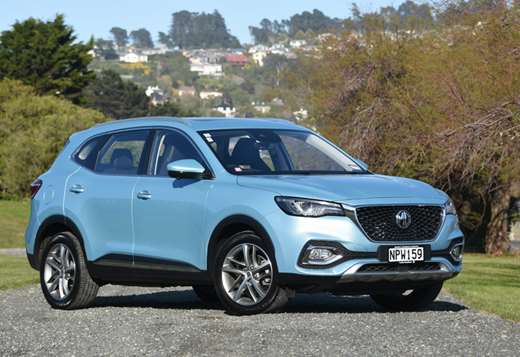
The Subaru Legacy 2.0D Euro Wagon. Photos by David Thomson.

After time behind the wheel of both petrol and diesel variants, David Thomson is impressed by all the wagon variants the latest Subaru Legacy has to offer.

New Zealand's best-selling mid-sized wagon has become a large wagon with the introduction of the fifth-generation Subaru Legacy range.

Given that the new Legacy is actually fractionally shorter overall than the model it replaces, that might seem like an odd claim. However, within the
confines of its 4775mm length there has been a room-enhancing shift in the vehicle's proportions courtesy of an 81mm increase in wheelbase, a 91mm increase in width and a 26mm rise in height.

The gains that flow from this are most apparent in the back seat, and to an extent that can be quite startling: opening the test car's back door first thing one morning, the space between the rear seat and front seat back was so great I initially thought my partner - who is rather shorter than I - had driven the car last.

In fact, the driver's seat was perfectly positioned to accommodate my 183cm (six foot) frame, yet there was still sufficient space behind for another six-footer to sit, with several inches of knee room to spare. The extra shoulder and head room liberated by the wider, taller cabin are also welcome in the back, and bring comfort benefits up front as well.

The boot benefits most obviously from being wider. There are a number of small compartments under the multi-segmented boot floor too, as well as a handy tray in which to stow the load cover when not required.

Drivesouth's test regime covered both the 2.5i petrol Legacy wagon - in $48,990 Sports Spec B automatic trim - and the European-spec $50,490 2.0D diesel manual.

Though unmistakeably a Legacy Wagon (albeit more slab-sided than before) trademark features of previous models such as the frameless side windows and glass-covered rear pillar have been consigned to the history books. There are also minor styling differences between variants tested: the Spec B sits on sports-oriented 225/45 tyres and 18-inch alloys rather than the diesel's quieter and better-riding combination of 205/60 tyres and 16-inch rims; the diesel has a bonnet-mounted air-scoop for its turbo intercooler and clear plastic incorporated into the rear light cluster.

Inside, the standard feature list for both variants extends to dual-zone climate control, a six-stack six-speaker CD sound system, cruise control, and multi-function trip-computer. Both models claim a five-star European NCAP crash test result, which was achieved by a diesel wagon fitted with the same complement of front, side and curtain airbags seen here. Electronic stability control and all-wheel drive are also standard.

The 2.5i Sport Spec B petrol features a driver's knee bag as well, and also differs from the diesel in having Bilstein Sports suspension, metal-effect sports pedals, sports seats, imitation carbon-fibre trim highlights and tinted rear windows. The diesel, though, boasts a greater array of comfort and convenience extras, including heated and power-adjustable front seats, rain-sensing wipers, automatic headlights, and Bluetooth connectivity.

The petrol engine is a further development of Subaru's long-serving 2.5-litre boxer motor, which now delivers peak outputs of 123kW and 229Nm, and is mated to a new six-stage constantly variable (CVT) transmission that includes paddle-shift controls mounted on the steering column. Replacing a conventional five-speed auto, the CVT gearbox plays a crucial role in improving the 2.5i's economy to a commendable 8.4-litre/100km standard cycle average.

Operating in conjunction with a six-speed manual transmission, the 110kw/350Nm diesel is an enhanced version of the boxer diesel that made its debut here last year. It delivers even more strongly in economy terms, with a 5.9l/100km figure for the standard cycle.

Neither variant matched its standard cycle figures on test though the diesel, averaging 6.7l/100km in Drivesouth's hands, bettered the petrol's 8.9l/100km result by almost 25%.

The diesel also felt stronger and more flexible in performance terms, which is unsurprising given that it produces peak power and torque far lower in the rev range than the petrol, and has 53% more peak torque at its disposal.

Overall, the performance of the 2.5i CVT is best described as a little sluggish off the mark but adequate, while that of the diesel is good.

Interestingly, once on the move, the diesel also sounds more like a traditional Subaru than the 2.5i, simply because the manner in which the latter's CVT transmission maintains constant revs tends to mask the traditional boxer growl of its engine when the car is accelerating.

Given these points, one might well ask if the diesel would benefit more from the sports-focused Spec B dress-up provided on the petrol. The answer is probably yes, though I for one am pleased that it did not have it on test, for while it is nimbler through the twists and turns, the Spec B rides less well over poorly-surfaced roads. The diesel is, in any case, a tidy handler in its own right. Despite obvious body roll when pushed really hard, it turns into bends neatly, brakes well, grips well and steers nicely.

With its more absorbent suspension and taller tyres, the diesel is not as prone to audible suspension thump or coarse chip road rumble either.

Thanks in part to the shift to conventional full-framed doors, both variants contain wind roar far better than the previous Legacy range.

Take all of this into account, and the 2.0D is the clear winner of any shootout with the 2.5i Sports Spec B. Those who still prefer petrol do, though, have a couple more Legacy wagon options to choose from.

One is the standard 2.5i Sport, which lists as a manual for $42,990 and a CVT auto for $44,990.

The other is the CVT-only 2.5i Premium which, for $49,990, ditches the Spec B pack, but picks up leather trim, front power front seats, automatic headlights, 17-inch alloys and a power sunroof. While each of these petrol alternatives may ride better than the Spec B, in performance and economy terms the diesel is still the undisputed star of this impressive new Legacy line.


Subaru Legacy 2.0D Euro Wagon: Bigger is better in the new Legacy wagon
At a Glance

SUBARU LEGACY 2.0D EURO WAGON

Rating: 4

For: New-found spaciousness, easy performance of diesel.

Against: petrol-CVT version not especially peppy.

Verdict: Bigger is better with the all-new Legacy.

SPECIFICATION

Price: $50,490

Engine: 2.0-litre common rail turbocharged diesel four-cylinder, max power 110kW@3600rpm, max torque 350Nm@1800rpm.

Transmission: Six-speed manual, four-wheel drive.

Brakes and stability systems: Disc brakes with ABS, EBD, BA, VDC.

Wheel, tyres: alloys and 205/60 R16.

Fuel and economy: Diesel, 6.1 litres per 100km (on combined cycle), capacity 65 litres.

Dimensions: length 4775mm, width 1780mm, height 1535mm.

MAIN RIVALS
Ford Mondeo, Peugeot 407 Wagon.


RATING (4/5)